
You Make 35,000 Decisions a Day. Nobody Ever Taught You How. | Argumentree
Researchers asked people how many food decisions they make in a day; the average guess was about 15, and the counted figure was 226 for food alone. Widening the lens to everything else puts common estimates around 35,000 decisions a day. The problem this creates is that a process you cannot see is a process you cannot improve. Decision-making is the skill sitting underneath reading, writing, managing, coding, presenting and leading, and it is the one skill that receives no class, no coach and no deliberate practice. Human choice runs on two systems: a fast, automatic, emotional one that handles the overwhelming majority of the day on pattern and instinct, and a slow, deliberate, effortful one that is used only when a decision demands thought. The failure mode is not having a fast system but leaving it in charge when a decision deserves the slow one, so that a major commitment is made with the same machinery used to pick a sandwich. Deciding well is therefore not a fixed personality trait but a set of learnable habits: noticing which decisions actually matter, slowing down on the few that do, having a method rather than a mood, and knowing when to override the fast brain. A small edge in how you decide, repeated across tens of thousands of daily choices, compounds into the difference between two people of identical intelligence ending up in very different places.
You Make 35,000 Decisions a Day. Nobody Ever Taught You How.
The one skill sitting underneath every other skill — and the only one no one trains.
Researchers once asked people how many food decisions they make in a day.
The average guess was about 15.
Then they actually counted. The real number was 226 — just for food. Coffee or tea. This snack or that one. One more bite or stop. Most of it invisible, even to the person doing it.
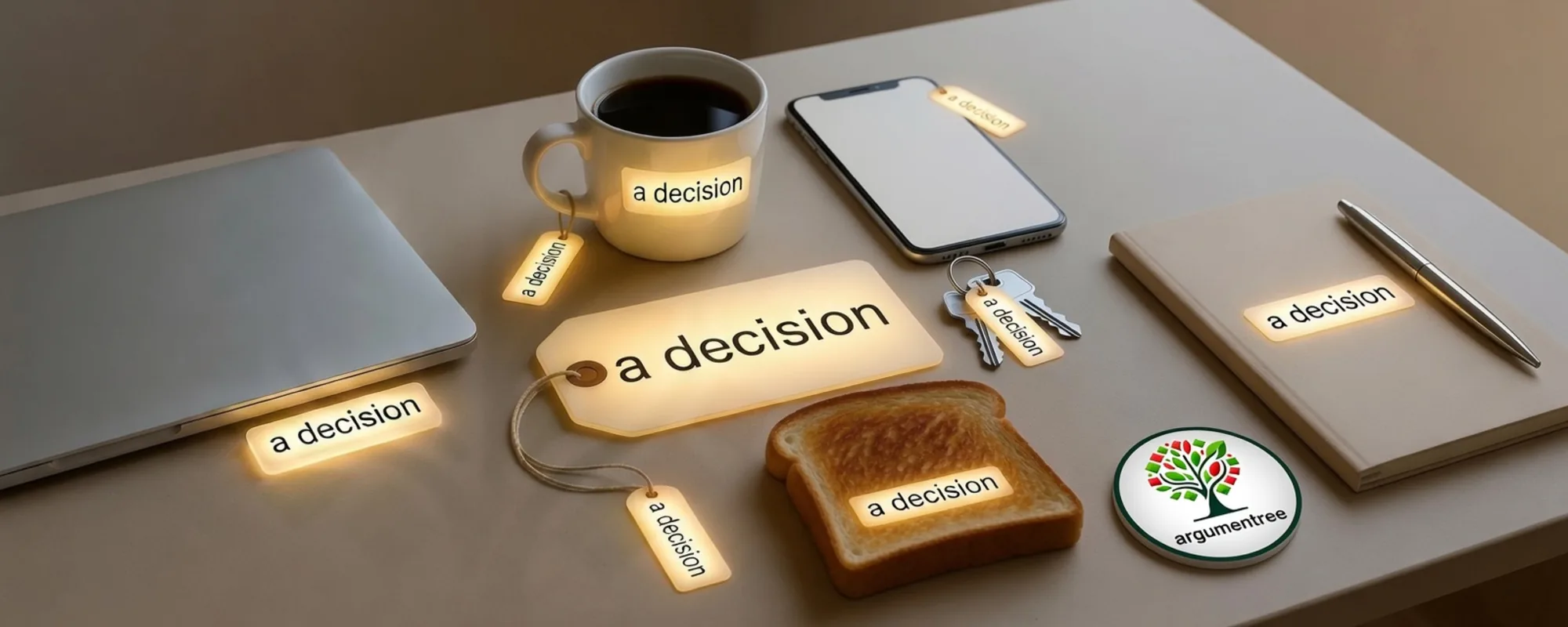
Now widen the lens. Add what to wear, what to say, what to send, what to ignore, when to speak up, when to let it go. Estimates put the total somewhere around 35,000 decisions a day.
Here's what should bother you about that number: you can't get better at something you can't even see.
The skill underneath all the others
We spend years learning to read, write, manage, code, present, and lead. We take courses. We get coached. We practice.
But the skill underneath all of those — the ability to choose well — gets nothing. No class. No coach. No reps.
We just… decide. And then we wonder why some people seem to move through life with a kind of quiet clarity while the rest of us feel busy, stuck, and vaguely behind.
It's not that they were born decisive. It's that they stopped treating decision-making like weather — something that just happens to them — and started treating it like a craft.
You are the sum of choices you don't remember making
Step back far enough and a life is just a long chain of decisions compounding on each other.
Your career is a few hundred choices about what to pursue and what to decline. Your health is thousands of small ones about what to eat and whether to move. Your relationships are an endless series of tiny calls about what to say and how to respond.
Almost none of those were made carefully. Most were made in under a second, by a part of your brain optimized for speed, not accuracy.
That's not a character flaw. It's design. But it has a cost — and the cost compounds.
A small edge in how you decide, repeated 35,000 times a day, is not a small edge. It's the whole game.
Your brain runs at two speeds
Here's the part almost nobody is taught. You don't have one mind making choices. You have two systems, and they could not be more different.
- •The fast one is automatic, effortless, and emotional. It handles the overwhelming majority of your day on pattern and instinct. It's the reason you can drive home without remembering the drive.
- •The slow one is deliberate, logical, and tiring. It's the one you use when a decision actually requires thought — and it's lazy, because thinking burns real energy.
The problem isn't that you have a fast system. The fast system is a gift; you'd be paralyzed without it.
The problem is that the fast system stays in charge even when the decision deserves the slow one. You make a $40,000 choice with the same machinery you use to pick a sandwich — and you don't even notice the handoff never happened.
Nearly every famous "mistake" — the bad hire, the doomed merger, the argument you can't take back — is really a story about the wrong system being left in charge at the wrong moment.
"I'm just bad at decisions" is a sentence worth deleting
People say it all the time, in the same flat tone they'd use to report their height: I'm just bad at decisions. As if it were fixed. As if it were them.
It isn't. Deciding well is not a personality trait you're issued at birth. It's a set of habits, almost all of them learnable:
- ✓Noticing which decisions actually matter (most don't)
- ✓Slowing down on the few that do
- ✓Having a method instead of a mood
- ✓Knowing when to trust the fast brain and when to override it
None of that requires being smarter. It requires making the invisible process visible — which is the one thing the 226-food-decisions study proves we almost never do.
You can't improve a process you can't see. So that's where we start: by seeing it.
What changes the moment you start paying attention
Not much, at first. And then everything.
You catch yourself saying yes out of guilt. You stop spending precious mental energy on choices that don't deserve it. You sit in a meeting and realize, with new clarity, that it "decided" absolutely nothing. You start telling the difference between a choice you can undo in five minutes and one you'll live with for five years — and you stop treating them the same.
That's the entire shift. Not more willpower. Not more intelligence. Just attention, pointed at the one thing you were never taught to look at.
Where this goes
This opens The Decision Edge, a three-part series on how we actually decide, argue, and choose together.
Next come the tools — the small set of frameworks that high performers quietly use to cut through noise and decide faster and better. You can learn all four in about ten minutes. After that: how to turn those tools into habits, so good decisions become your default instead of something you force at 11pm when you're already exhausted.
But the tools only matter once you've accepted the premise of this piece: the quality of your decisions becomes the quality of your life. It is, quietly, the most important skill you own — and almost nobody practices it.
You can be one of the few who does. So here's the question worth sitting with: what's one decision you make on autopilot every single day that might actually deserve a few seconds of real thought?
Make the process visible
Argumentree turns the decisions you make with other people into something you can see, structure, and look back on — instead of something that evaporates when the meeting ends.
Start Free 14-Day Trial →